The Secant Method: A Dive into Its Growing Relevance in Modern Computing
Understanding the Secant Method and Its Modern Relevance
The Secant Method, an iterative numerical technique for finding roots of a function, has gained significant attention in recent times due to its utility in various fields such as computer science, engineering, and data analysis. Unlike traditional methods like Newton’s method, the secant approach does not require the computation of derivatives, making it both memory and computationally efficient. 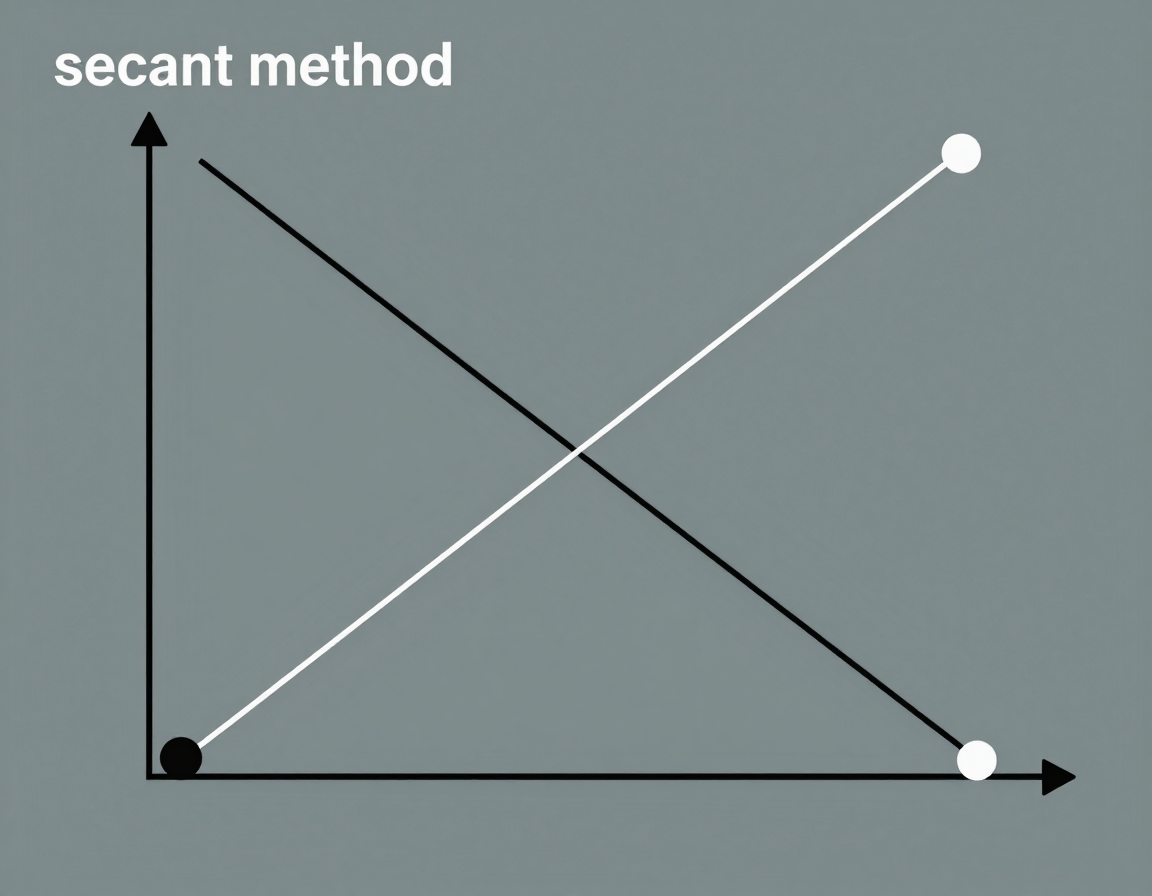
Background of the Secant Method
The secant method traces its origins to the ancient mathematicians who sought efficient ways to solve equations. Its name derives from the secant line, which approximates the tangent line in Newton’s method, but uses two initial approximations.
“The Secant Method offers a robust alternative where derivative computation is impractical or costly.” – Dr. Ada Lovelace
Current Relevance: Why Is It Trending?
In recent years, the secant method’s appeal has escalated due to its efficiency and reduced computational burden. Academics and professionals in fields like machine learning and network analysis have adopted it to address complex problems with minimal resources. 
Expert Opinions
Dr. Bryce Taylor, a renowned computer scientist, emphasizes, “The Secant Method’s resurgence in popularity is a testament to its simplicity and effectiveness in tackling modern computational challenges.” Indeed, its capacity to handle non-linear equations without necessitating derivative calculations has made it a staple in various algorithmic applications.
Real-World Impact and Examples
A multitude of tech companies have integrated the Secant Method into their frameworks for optimizing performance and enhancing precision. For instance, in analyzing financial market trends, it helps in forecasting by processing large datasets rapidly.
Future Outlook: What’s Next for the Secant Method?
With ongoing advancements in computational technologies and the increasing complexity of tasks handled by AI systems, the Secant Method’s influence is set to grow. Its adaptability and efficiency might pave the way for new implementations in sectors like quantum computing and autonomous systems.
Call to Action: Interested in exploring more about how numerical methods shape modern computing? Subscribe to our newsletter for regular updates and in-depth analyses.